Your Energy Bill Is Going Up 26%. Can Anyone Explain Why?
The bill is going up 26% and nobody can explain why in plain English. Turns out that's been the actual problem since the 1990s, chatbot or not.
The Letter Everyone's Dreading
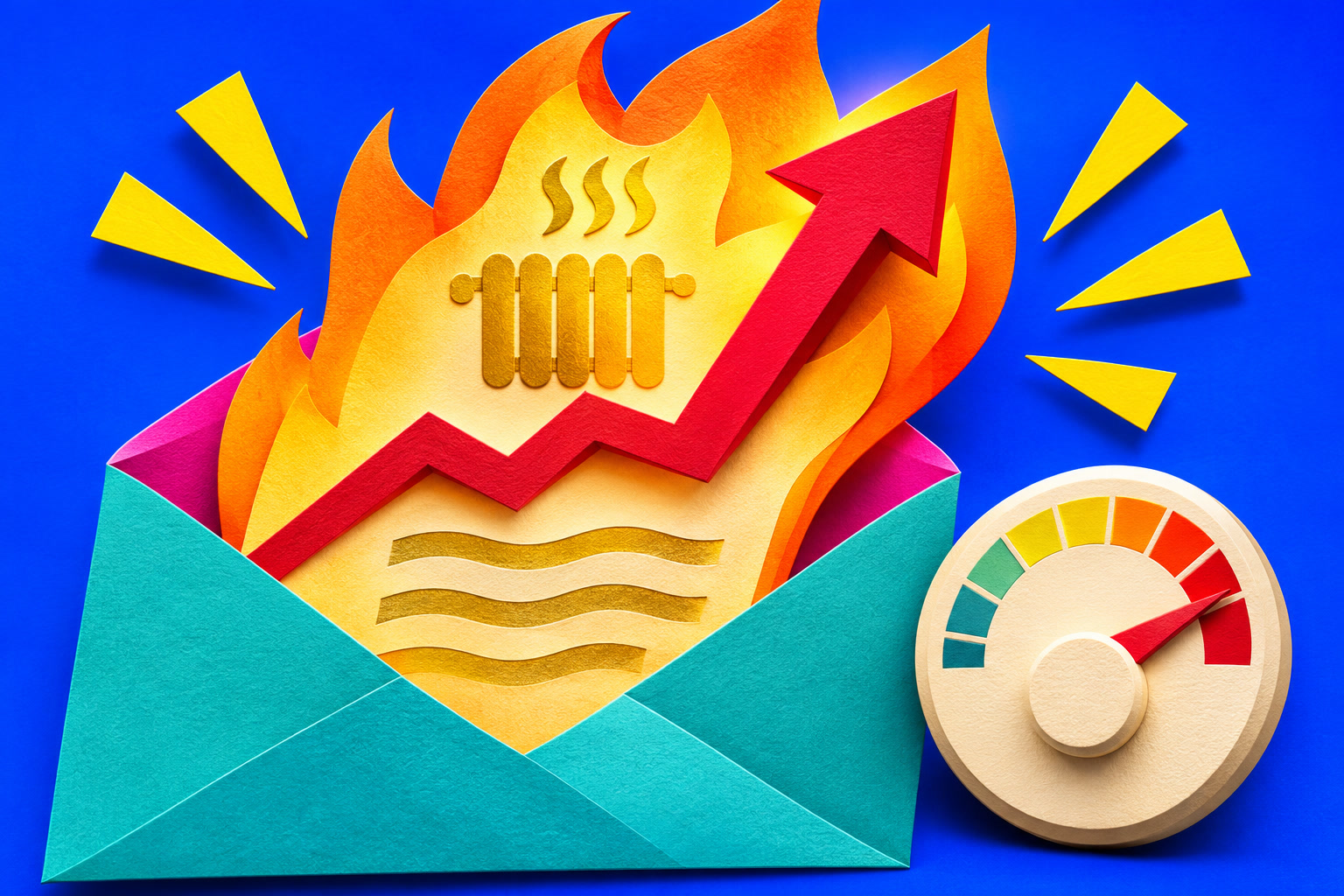
You can feel this one before it even arrives. The direct debit letter, the app notification, the 'your payments are changing' email. This week Ofgem is expected to confirm what everyone suspects: the typical dual-fuel bill is going up 26%, to £2,166 a year from January, a jump of £443 on what people are paying now. Some supplier forecasts, including from British Gas, EDF and E.ON, put the rise as high as 28%.
Contrary to a certain one-time campaign song, things can only shitter. It is the kind of bleak joke doing the rounds this week because it is, annoyingly, accurate.

£443 and a Pay Cut Nobody Asked For
The timing is grim. UK real wages fell for the first time since 2023, with regular pay down 0.2 per cent even as fuel and energy costs push inflation up. The government's one-off help, a £100 payment for council tax bands A to D announced in the autumn budget, is not nothing, but it is not £443 either.
So the group chat fills up with 'mine's gone up again' and nobody has a satisfying answer. Fair enough. The number itself is not within anyone's control from where you're sitting with a mug of tea and a calculator.
A Grievance Older Than the Chatbot
What is within a company's control is whether you understand the bill once it lands. This is not a new problem. Back in the early 1990s, British Gas faced a serious backlash over jargon-heavy bills and slow complaint handling, bad enough that the regulator eventually demanded plainer English. Confusing bills have been a national grievance, and a boardroom problem, for over thirty years, long before any chatbot existed.
What has changed is the tool suppliers now reach for to deal with it.

Where AI Actually Earns Its Keep
The most common reason customers contact an energy supplier is not to complain about the price. It is confusion about the bill itself: what a standing charge is, why the direct debit went up, whether switching would help. That is exactly the kind of question a chatbot can be built to answer, and energy chatbot vendors are selling it hard, with one vendor describing AI as something that 'optimises customer service for electricity, gas, and energy suppliers' and cuts costs. That's the vendor's own claim, not an independent one.
The real test is what happens when the question stops being simple. One customer who contacted their supplier this week about switching tariff ahead of the price rise put it plainly: the AI was useful to begin with, 'but when it became more complex I was passed to a human.' That's the honest shape of where this technology sits right now: a good first filter for the easy 80 per cent, still dependent on a person for the messy 20 per cent.

The Honest Result, Not the Hype
Switching rates have hit record highs as people hunt for cheaper tariffs after the bill shock, with suppliers courting new customers using tariffs reportedly around 20 per cent below last year's. That is good news for anyone willing to shop around, and a reminder that loyalty rarely pays in this market.
Who wins here is the supplier that automates the repetitive questions well, freeing trained agents to deal with the complicated cases, the wrong readings, the hardship calls, the genuine disputes. Who pays is anyone stuck looping with a bot that cannot actually fix a wrong bill, or cannot find the words to hand them over to a human when it should.
Three Things Worth Doing About It
Whichever side of the phone call you're usually on, there is something practical here.
- If you pay an energy bill, check your tariff now rather than waiting for January. Switching activity is at record highs because it is, for many people, worth the ten minutes.
- If you run a business where customers ring up confused, work out the single question that eats most of your team's time, and ask honestly whether it is answerable in plain English, whether that is by a person or a bot.
- If your business already has an AI assistant handling customer queries, test it the moment a question gets complicated, not the moment it's simple. That is where a customer either trusts you or gives up on you.
The price cap is going up whichever way you look at it. Whether your supplier earns a shrug or a furious phone call in January comes down to something much smaller and much more fixable: can their systems explain a bill in plain English before someone has to ring up and ask.
If that question sounds uncomfortably familiar for your own business, not just your energy supplier, Anchor Lotus Consulting is an AI implementation and business improvement consultancy, and sorting out exactly this kind of customer confusion is the sort of thing worth looking at before the next bill lands.
Sources
- Energy price cap forecast to rise 26% to £2,166 from January 2027
- Sainsbury's Energy: price cap explained
- Energy price cap January 2027: latest predictions and news
- UK real wages fall for the first time since 2023
- UK faces cost of living squeeze and regional disparities this winter
- AI in the energy sector
- AI customer service and churn prevention in utilities